A real-time operating layer for homelessness response

Move from fragmented services to a measurable system of care.

The Nexus gives communities a practical way to see available beds, coordinate across agencies, map unsheltered need, track referrals, and measure outcomes before people disappear back into the system.
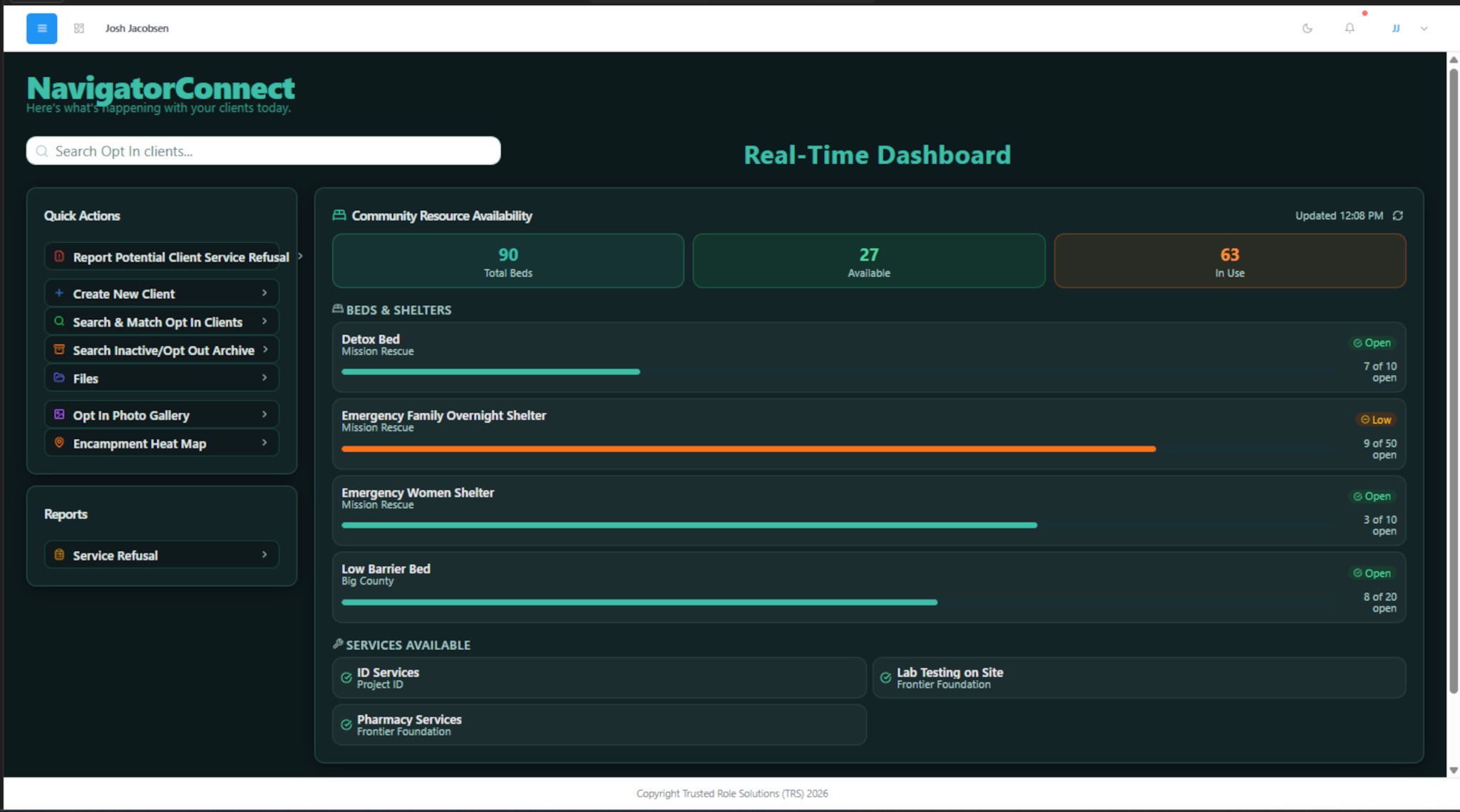
NavigatorConnect real-time dashboard showing bed availability and client actions
Live

Resource availability across agencies, beds, shelters, services, and client touchpoints.

Mapped

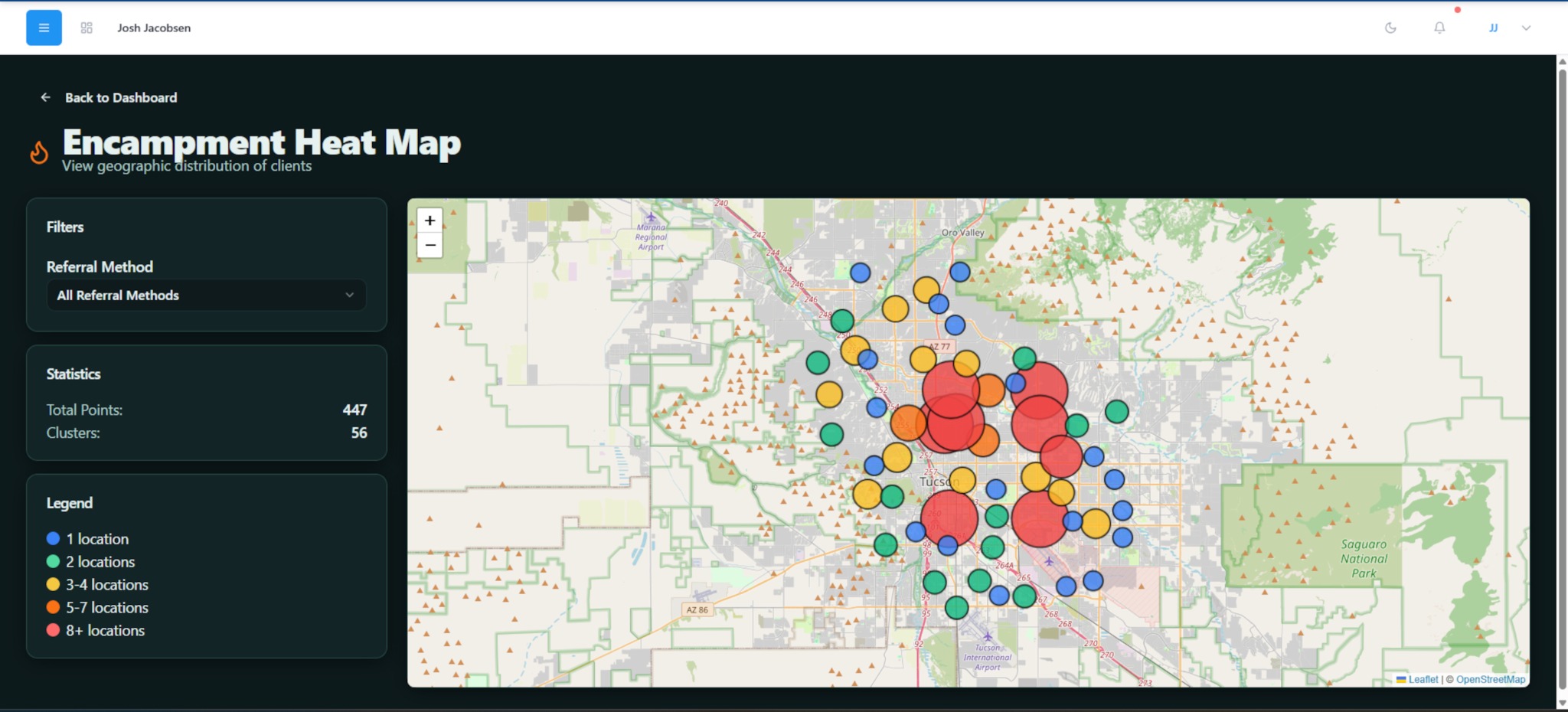
Encampment and client location data so outreach teams can see where the need is concentrated.

Accountable

Referrals, outcomes, dollars, capacity, and gaps can be tracked in one operational view.
The current model leaves too much invisible.

Communities are spending significant public dollars, yet many systems still cannot answer basic operational questions in real time.

Gap 01

Providers are siloed

Beds, services, and capacity are often spread across separate agencies with no shared operational picture.

Gap 02

Outreach is hard to measure

Early contacts, declined services, failed referrals, repeat encounters, and pre-enrollment work can fall outside the data story.

Gap 03

Outcomes lag behind spending

Without real-time tracking, communities cannot clearly connect dollars spent to stabilization, treatment, housing, or self-sufficiency outcomes.

A new approach: the coordination layer communities are missing.

The Nexus is not a replacement for HMIS or existing providers. It is an operational add-on that helps navigators, agencies, government, and funders coordinate in real time.

Navigator-agnostic workflows so teams can fill beds and connect services across agencies.
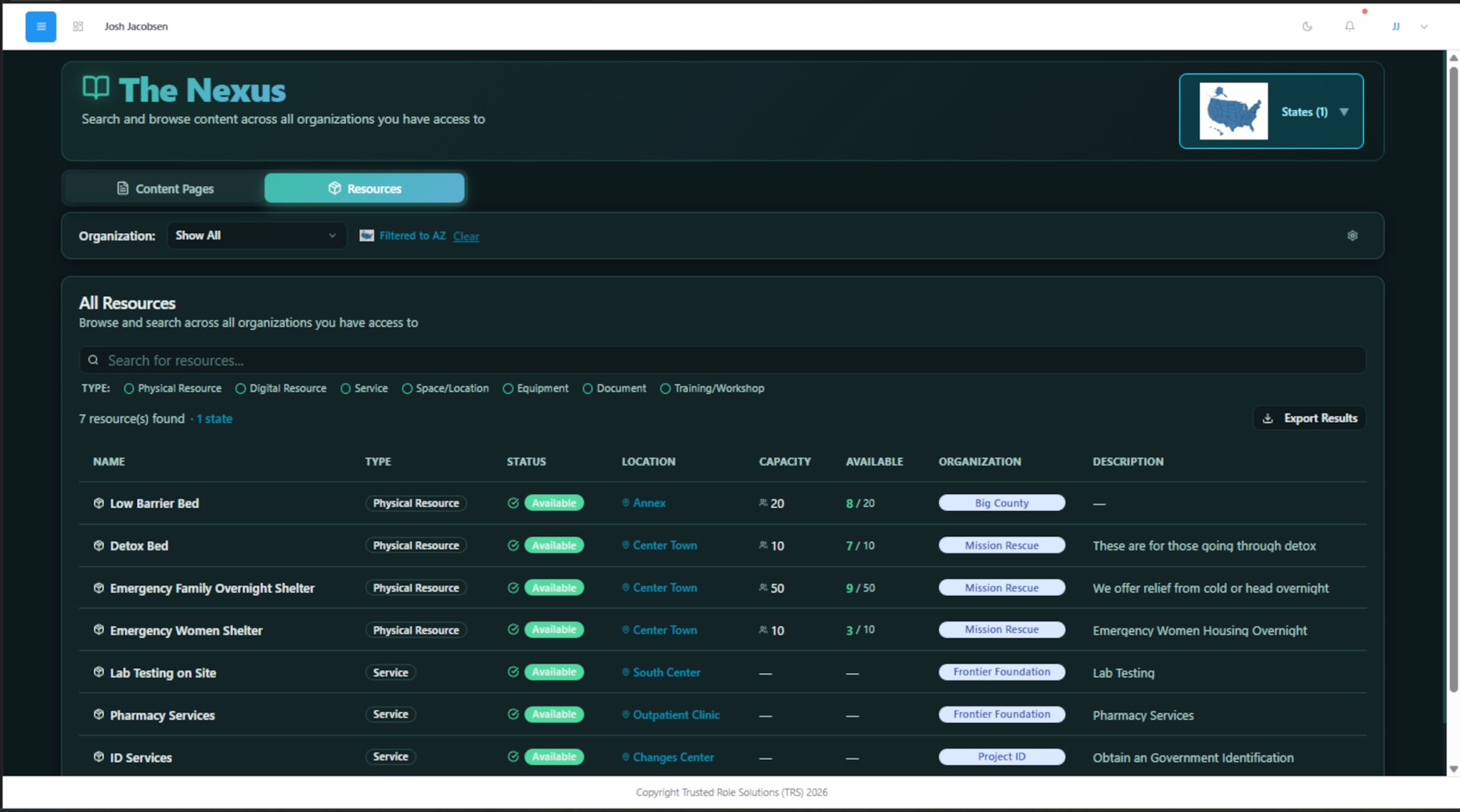
Real-time bed, shelter, service, and resource availability visible to authorized users.
Encampment heat maps that show geographic concentration and outreach demand.
Role-based access so each user sees the right data for their role and agency.
Outcome tracking that connects referrals, services, dollars spent, and results.
The Nexus resources page showing available beds, services, organizations and capacity

From a point-in-time snapshot to year-round system intelligence.

The Nexus can help communities understand inflow, engagement, refusal, service connection, and recurring barriers throughout the year rather than relying only on episodic counts or delayed reports.

Schedule a live walkthrough
Encampment heat map showing clustered client locations across Tucson
Operational visibility

See need, capacity, and action in the same place.

Outreach teams can identify service gaps, administrators can see utilization, and funders can ask better questions about what is working.

Why HUD and CoCs should pay attention.

The Nexus is designed around the practical questions local systems must answer to improve performance, reduce waste, and connect people to the right intervention faster.

Supports stronger System Performance Measures by tracking touchpoints, referrals, placement attempts, and outcomes.
Improves visibility into unsheltered outreach before a person enters formal enrollment.
Creates a shared resource directory that can be filtered by geography, agency, service type, and availability.
Helps identify whether public dollars are producing measurable stabilization and service connection.
Allows cross-agency coordination without forcing every provider into the same operational workflow.
Gives local leaders a real-time tool for accountability, triage, and transparent decision-making.

The need is urgent. The tools should be real-time.

The Nexus gives communities a way to coordinate services, fill available capacity, document engagement, and track whether interventions are actually moving people toward stability.

Request a HUD or CoC briefing